
Who we are
A charitable trust, registered in Chandigarh.
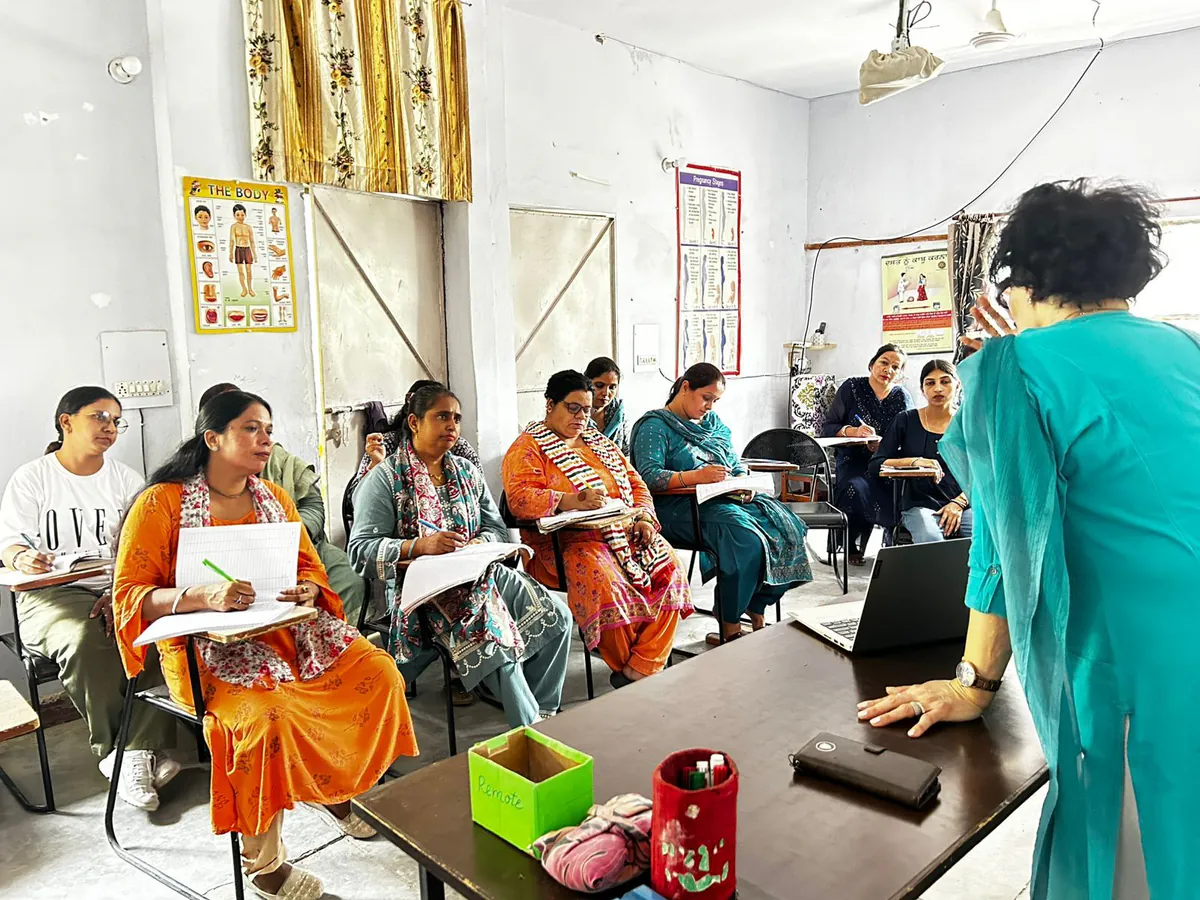
Communities carry out the change
Developing Indigenous Resources India (DIR) is a charitable trust in Chandigarh. We started our work in Janta Colony, Nayagaon. Today we also work in Dhanas, Chandigarh.
Many projects stop when the money stops. So we train and employ women from each colony as Health Promoters. They visit the homes in their area, weigh the children and follow each pregnancy.
DIR has no religious or political affiliation. Donations fund our work.
Our goals
- Reduce illness and death where the need is greatest.
- Help families improve their own health and the health of their children, at low cost and with little outside help.
- Show that this low-cost model can work in other colonies across India.
- Help women in the colonies earn an income of their own.
Our purpose
DIR was set up as a public charitable trust in Chandigarh. The preamble of its trust deed gives the reason for the trust: to improve the quality of life of communities in need, with special emphasis on health care and education.
The deed states the objects in a single sentence. The trust is “to improve the quality of life when this is most needed including but not restricted to the activities of setting up, research, training of man-power, development of existing infrastructure etc. of medical and educational facilities in under developed areas”. Health and education come first, and training people is named as part of the work.
The bylaws of the trust say how this should be done. DIR exists “to facilitate the development of indigenous human and other resources so that people in need will be able to improve the quality of their own lives and the lives of others in their communities”. Our staff help people and communities find “the permanent solutions to their own problems”. Temporary relief is for emergencies only.
Our name echoes these words. The resources we develop are local: above all the skills of women who live in the colony and the habits of their families. Every programme on this site follows from that choice.
Our objectives
Our goals say what we want to change. Our objectives say what that change looks like in a colony. They were set for each colony where we work, and they still guide the programmes. They shape what a Health Promoter checks on a home visit, what a committee meeting discusses and when a family is sent to a doctor. The table shows each objective, the programme that works on it and how we follow it today.
| Objective | Programme that works on it | How we follow it today |
|---|---|---|
| At least 99.5% of women aged 15–45 have a full series of tetanus shots. | Medical | Health Promoters visit each pregnant woman every month and guide women to government immunisation services. The government schedule now uses the Td vaccine for tetanus. |
| At least 99.5% of children under 5 are fully immunised for their age under the government schedule. | Medical | Vaccines are given by government health services, and Health Promoters guide families to them. |
| Parents can make oral rehydration solution at home and give it to a child with diarrhoea. | Medical; the Child Activist Program (CAP) | Health Promoters teach parents on home visits. School-age children practise it in CAP health games. |
| At least 99% of women who give birth have at least 2 antenatal and 2 postnatal examinations. | Medical | Monthly home visits to each pregnant woman; counselling on check-ups in hospital, supported by blood tests and ultrasounds. Health Promoters follow every birth in their zones. |
| Households know how to purify water or get clean water for the family. | Medical; the Dhanas pilot (plan) | Advice on clean drinking water on home visits and at committee meetings. Safe water, sanitation and hygiene are part of the pilot design for Dhanas. |
| Households are kept clean and dispose of waste better. | Medical | Hygiene advice on home visits; committee meetings on illnesses that spread from dirty water and standing water, such as dengue and typhoid in the monsoon. |
| Personal hygiene and related habits improve. | Medical (CAP); Education; Women’s skills | Health and hygiene games in CAP; a hygiene check of nails, shoes and uniforms each Monday at SWAD School; menstrual hygiene sessions for girls and women. |
| Birthing practices improve. | Medical | Health Promoters encourage every family to plan a hospital birth. Women of our areas who give birth in Chandigarh now give birth in hospital. |
| Every health problem found in the community is dealt with. | Medical; Nutrition | Families are guided to government health services first; DIR helps directly only in exceptional cases. Red-zone children are invited to NIPP meals. |
The percentages are the targets of the original objectives. The rates reached for them are not published yet.
How the model works
The model starts with a job. In each colony, DIR employs women who live there as Health Promoters. Many joined with no health knowledge at all. They learn in weekly classes with DIR’s doctors and dietitians: a medical topic and a nutrition topic each month, with a test after some sessions. Each week the field coordinators also give a presentation, and the Health Promoters then present the same topic themselves.
Each Health Promoter looks after the households of her zone. She works in a pair with a colleague, under a senior staff member. Every month she weighs each child under five and marks the weight green, yellow or red. A child in the red zone, more than three kilograms below normal weight, is invited to NIPP meals. She visits each pregnant woman every month and keeps the household register of her area up to date.
Once a month, each Health Promoter meets a committee of about a dozen women of her block. The topic follows the season and the month’s death records: dengue and typhoid in the monsoon, for example. On the third Tuesday of each month the dietitians show a low-cost recipe, and the Health Promoters teach it to the mothers of their zones.
When a family needs more than advice, the Health Promoter guides it to government services first: immunisation, the government hospitals of Chandigarh and other public care. DIR helps directly only in exceptional cases. The aim is to help families use the services that exist, not to replace them.
This is why the model lasts. Projects that bring relief from outside fade when the funds run out. Knowledge that lives in a neighbour’s head does not leave when a grant ends. Several field coordinators started out as the first Health Promoters, hired when the work began.
“Knowledge that lives in a neighbour’s head does not leave when a grant ends.”
Where we work
We work in Janta Colony, Nayagaon, and in Dhanas, Chandigarh. Janta Colony, with Adarsh Nagar, lies in Nayagaon, District SAS Nagar (Mohali), Punjab: an unincorporated settlement near Chandigarh. Our work began there, and our office and centre are in Adarsh Nagar. SWAD School, the NIPP meals and the classes for women and Health Promoters run there.
Dhanas is a rehabilitation colony in Chandigarh, laid out in blocks of flats. Our team first surveyed families there before the pandemic, but the work stopped because of COVID-19. Our CEO later began weekly committee meetings in Dhanas, and DIR then adopted Dhanas as a medical project. Health Promoters have worked there since.
Each Health Promoter keeps a register of the households of her area: the people in each home, births, deaths, families who arrived and families who left. She updates it every month. The registers matter because many families move between the city and their home village, and the numbers change from month to month.
In Dhanas, DIR has also designed a pilot of three years in part of the colony. It has begun with field visits a couple of times a week, and the full pilot will start once funding is secured. The Dhanas pilot page sets out the design and where the pilot stands.
Our story so far
Our story is one of slow, steady growth from a single colony.
- 3 December 2004The trust is registered with the Sub-Registrar, Chandigarh, under the trust deed of 30 November 2004.
- 2006Work begins in Janta Colony, Nayagaon. The first Health Promoters are hired; in the early days the team meets under a tree in the colony.
- 2008SWAD School opens for the children of the colony, and the health care programme grows to cover more of Janta Colony.
- 2009The Child Activist Program (CAP) begins: school-age children learn health and hygiene through games.
- 2010Stitching classes for women start with donated sewing machines.
- January 2015Vitamin A doses for young children begin, given twice a year.
- September 2016DIR hands over the monitoring of TB treatment, which it had run for years, to the Punjab Government’s ASHA workers.
- 2017Health Promoters find many infections among girls and women, and DIR begins its menstrual hygiene work.
- 2019Our team surveys families in Dhanas. The work there stops in March 2020 because of COVID-19.
- 2020In January, Health Promoters learn about the new coronavirus and teach families through committee meetings. From 30 March, DIR gives grocery kits to families who lost their daily wages in the lockdown.
- 4 January 2021Rozgar Hamara Vyapaar, a spice-grinding unit run by women of the colony, is launched.
- February 2022Project Alambana begins: school, meals and care for children of waste-picker families, girls first.
- October 2023Our CEO begins weekly committee meetings in Dhanas.
- January 2024DIR adopts Dhanas as a medical project. Health Promoters start a register of the families of Dhanas.
- January 2026CAP starts in Dhanas.
- 2026DIR designs a Dhanas pilot of three years, in which new Health Promoters from Dhanas learn from experienced colleagues.
What we stand for
A few rules hold for all our work. Some come from the trust deed, some from the way we have worked since the start. They are the promises we make to the families of the colonies and to everyone who supports us.
- No religious or political affiliation.
- Help by need alone, without regard to class, caste, gender, race or any other characteristic.
- Trustees serve without pay. They may be repaid only their actual expenses.
- The accounts are audited by a Chartered Accountant every year.
- The assets of the trust can never go to the trustees.
- No story on this site names a child.
- No photo shows a child without the written consent of a parent.
Privacy is part of the work, not an extra. Health Promoters know the families of their zone well, and families trust them with that knowledge. We publish totals, never the record of a single household.
Donate
UPI or bank transfer, for donors in India.
DonateVolunteer
Students and professionals join our team.
Join the teamContact
Visit us in Nayagaon, Monday to Friday.
Get in touch