
Women’s skills
Tailoring classes and support that help women earn an income.
How it works
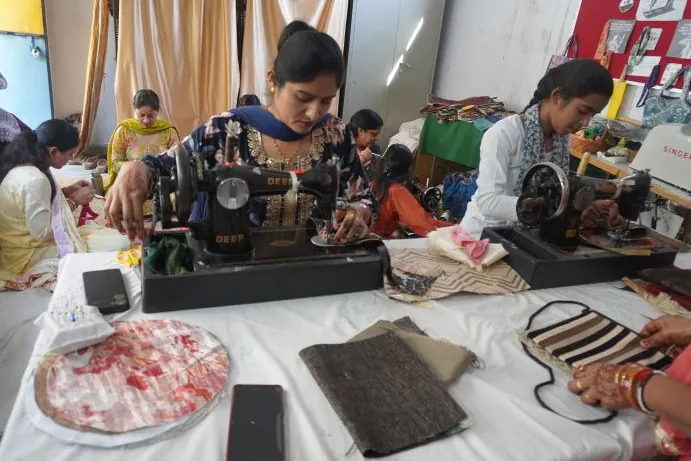
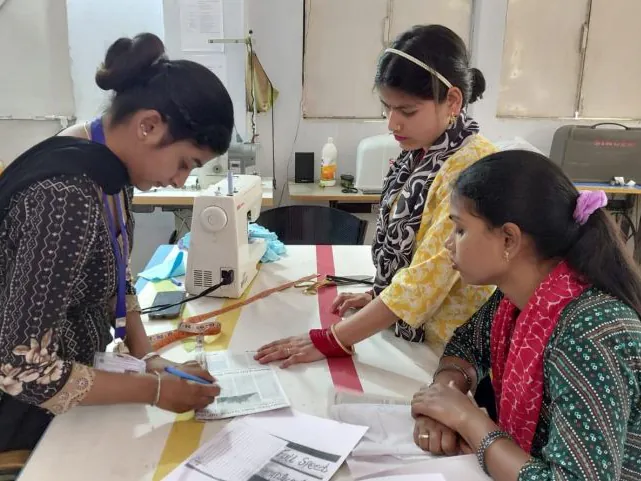
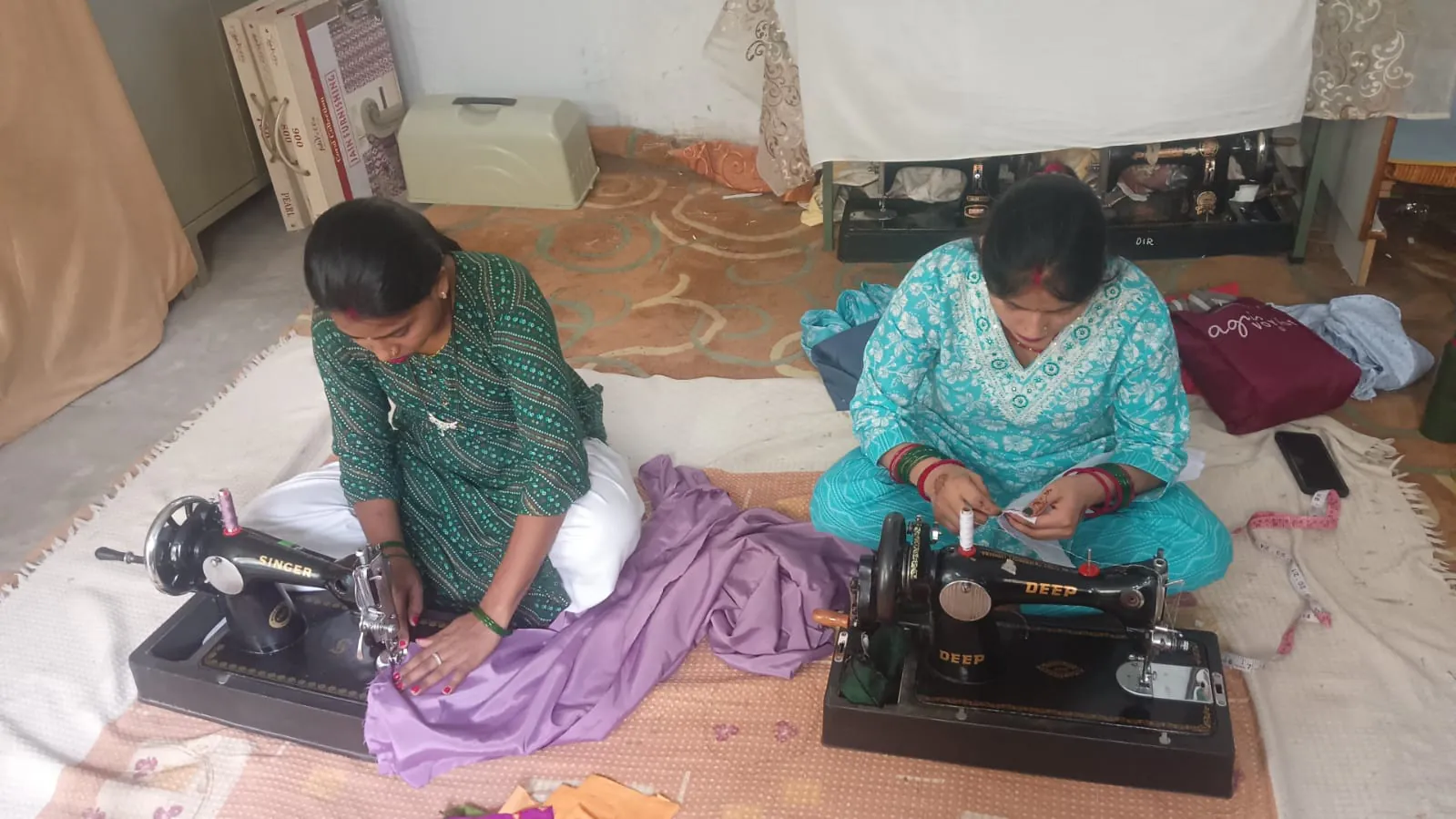
Women from the colony learn tailoring at the DIR centre, step by step: seams, darts, sleeves and necklines. They show and sell their products at exhibitions. Women in need also get sewing machines, so that they can work from home.
- Tailoring and embroidery classes at the DIR centre
- Exhibitions of products
- Sewing machines for women in need
- Menstrual hygiene sessions
“Women in need also get sewing machines, so that they can work from home.”
What the programme is
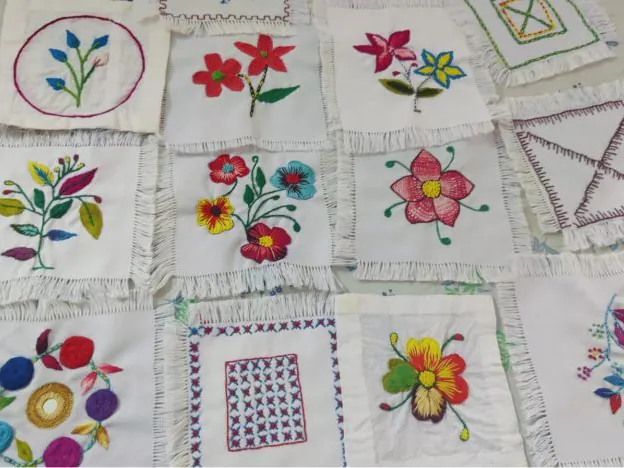
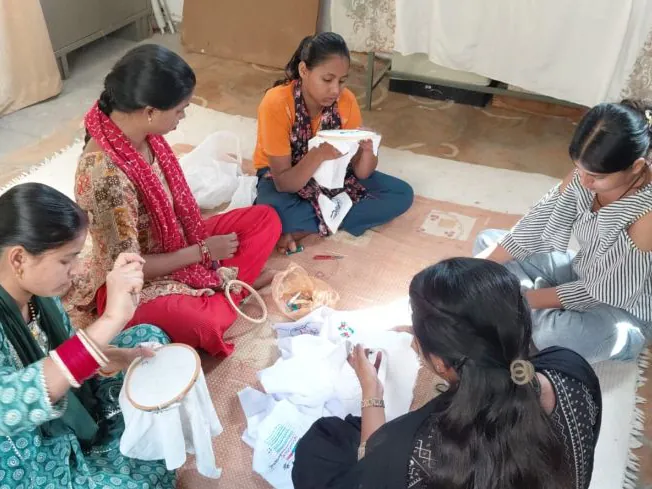
The skills programme helps women of the colonies earn an income. At its centre is a course in tailoring and embroidery at DIR, run by a tailoring teacher, with classes in the morning and in the evening. Women learn to stitch every type of fabric and pattern and to embroider, step by step, with a new topic each month: seams and ruffles, darts and frocks, casing and pintucks, necklines and sleeves. Products from the class are shown and sold at exhibitions in Chandigarh.
The course is for girls and married women from labouring and low-income families. Its goal is that a woman can earn her own income, meet her own needs and raise the standing of her family, through a job or through work from her own home.
The programme also covers women’s health and the tools for work. Menstrual hygiene sessions with doctors come with reusable pads for girls and women. Women in need, among them widows, receive sewing machines so that they can work from home.
Why it matters
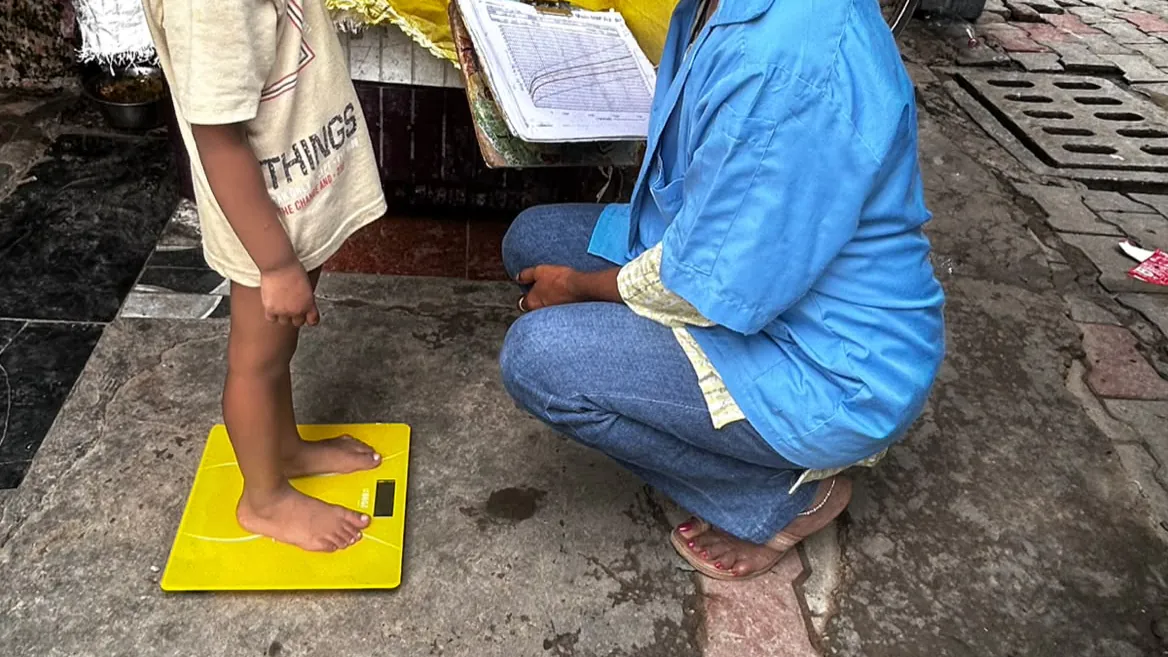
Janta Colony offers few ways to earn a living, particularly for women. Many women leave before dawn to clean houses or sell on the street, and the eldest child looks after the younger ones. The Health Promoters saw the effect on the scales: children gained very little weight in homes where the mother was away most of the day.
Work at home changes that. A woman who can sew can earn and still be with her children, and women spend most of their income on better food and schooling for their children. Children who had been underweight for a long time began to gain weight more quickly. Skills work is part of the health model, not an add-on to it.
“Skills work is part of the health model, not an add-on to it.”
Health is part of the reason too. Gynaecological problems are common among young girls of the colony, linked to poor menstrual hygiene. That is why the programme pairs reusable pads with talks by doctors, for adolescent girls as well as women.
Month by month
The tailoring class runs through the year with a new topic each month. Health sessions and exhibitions fall at fixed points in the year. Computer classes pause for the summer.
- Each monthA new tailoring topic, from seams and darts to necklines and sleeves.
- MayA menstrual hygiene session around Menstrual Hygiene Day, with reusable pads.
- JuneComputer classes close for the summer.
- October and NovemberExhibitions and sales of products in Chandigarh.
How the work is organised
The tailoring class
Stitching classes began with donated sewing machines and samples from fabric and upholstery stores. From the start, DIR has charged each student a nominal monthly fee, in keeping with its policy of recovering part of its costs; the fee is under In numbers above. In earlier years the course was recognised by the Ministry of Skill Development, with exams by Jan Shikshan Sansthan. Today the course gives professional training in both stitching and embroidery and follows a monthly syllabus; at its end, those who complete it take an exam for a certificate, and the products made under the teacher’s guidance go to exhibitions.
Exhibitions
Exhibitions in Chandigarh let the women show and sell their work. They have been held at colleges, at a theatre and at the Rose Festival at Panjab University.
Menstrual hygiene
DIR’s menstrual hygiene work began after the Health Promoters found many infections among girls and women. Health Promoters and girls of the colony once stitched their own reusable pads, which were tested in a laboratory. Today sessions with company and university partners give reusable pads to adolescent girls and women, with talks by doctors.
Sewing machines
Women in need, among them widows, receive sewing machines to work from home. Donors give the machines.
Other skills over the years
The programme has tried other ways to earn. During the pandemic the tailoring unit made cotton masks and sold them at affordable prices. DIR also started Rozgar Hamara Vyapaar, a spice-grinding unit where women cleaned, ground, weighed and packed spices for sale. With a company foundation’s CSR programme, DIR ran a medical attendant course: classes at DIR, then practice in hospitals.
What it has achieved
The programme counts what takes place rather than what women earn: classes, exhibitions, health sessions and machines handed out. The menstrual hygiene work has grown into large distributions of reusable pads, and sewing machines go to women in need. The counts, year by year, follow below.
In numbers
For the year 2026–27
- 6months of the tailoring and embroidery course, with classes in the morning and in the evening, and an exam for a certificate at the end
- ₹500a month: the nominal fee DIR charges each student of the tailoring and embroidery course, in keeping with its cost-recovery policy
- ₹600a month sponsors one student of the tailoring and embroidery course
- ₹7,200a year sponsors one student of the tailoring and embroidery course
For the year 2025–26
- 2,000 + 2,000reusable sanitary pads given out at the May and November sessions
- 101adolescent girls at the menstrual hygiene session of November 2025
- 10sewing machines handed out to women in need
- 1exhibition of products
2024–25
- 6months of the medical attendant course with a company foundation’s CSR programme, from December 2024: 3 months of classes at DIR, 3 months in hospitals
2021–22
- 1,200reusable pads stitched by Health Promoters and girls of the colony, tested in a laboratory
2019–20
- 4-monthtailoring course recognised by the Ministry of Skill Development, with exams by Jan Shikshan Sansthan
History
- 2010stitching classes begin at DIR
| Activity | 2023–24 | 2024–25 | 2025–26 |
|---|---|---|---|
| Exhibitions of products | 3 | 2 | 1 |
| Reusable pads given out | not given | small distributions, not counted in pads | 2,000 + 2,000 |
The number of women trained each year and what women earn are not published yet.
What is hard
Paid work for women in the colony is scarce, and work outside the home means long days away from the children. Girls of the colony who want skills courses often cannot pay the fee. Exhibitions bring sales only at a few points in the year, mostly in October and November.
Links to government services
The skills programme works with public bodies where it can. A Municipal Corporation team under Swachh Bharat Abhiyan has taken part in a pad distribution. The tailoring course was recognised by the Ministry of Skill Development, with exams by Jan Shikshan Sansthan, and computer batches have run with Jan Shikshan Sansthan. An ITI computer teacher has selected students from DIR for free IT training.
Watch
DIR made the films below about the skills work. They show women of the colony stitching masks in the pandemic, the start of the spice unit and products made by the programme. The women in them are members of the colony, filmed at work. Some of what the films show, such as the spice unit, belongs to earlier years.
-
The video loads from youtube-nocookie.com only after you press play.
A Helping Hand: the tailoring programme makes masks
Women in the tailoring programme stitch reusable cloth masks during the COVID-19 pandemic. The masks are sold at an affordable price. The work helps the colony fight the pandemic, earns money for the programme and gives women paid work. Tailoring runs alongside academic and computer classes.
Watch on YouTube: A Helping Hand: the tailoring programme makes masks
-
The video loads from youtube-nocookie.com only after you press play.
Rozgar Hamara Vyapaar: women grind and pack spices
Rozgar Hamara Vyapaar began on 4 January 2021 for women of Janta Colony, Nayagaon. The film shows the new spice-grinding machine arriving and a first demonstration. Women clean, grind, weigh and pack spices bought wholesale and sell them at a small profit, so the work pays for itself and gives women of the colony paid work.
Watch on YouTube: Rozgar Hamara Vyapaar: women grind and pack spices
-
The video loads from youtube-nocookie.com only after you press play.
Products made by DIR India
A one-minute film that shows products made and sold by DIR India, part of the skills work that helps women of the colonies earn an income.
How you can help
Many girls and women cannot pay the course fee. A sponsor can pay for the place of one student in the tailoring and embroidery course; the sponsorship per month and per year, and the student fee, are under In numbers above. Companies can support menstrual hygiene sessions through CSR, as company and university partners have done. Donors can give a sewing machine to a woman in need, or sponsor a girl’s computer classes. A gift by UPI or bank transfer supports the tailoring class and its teacher.
Programme updates
Embroidery samples from the course
Embroidery with hoops
Drafting paper patterns
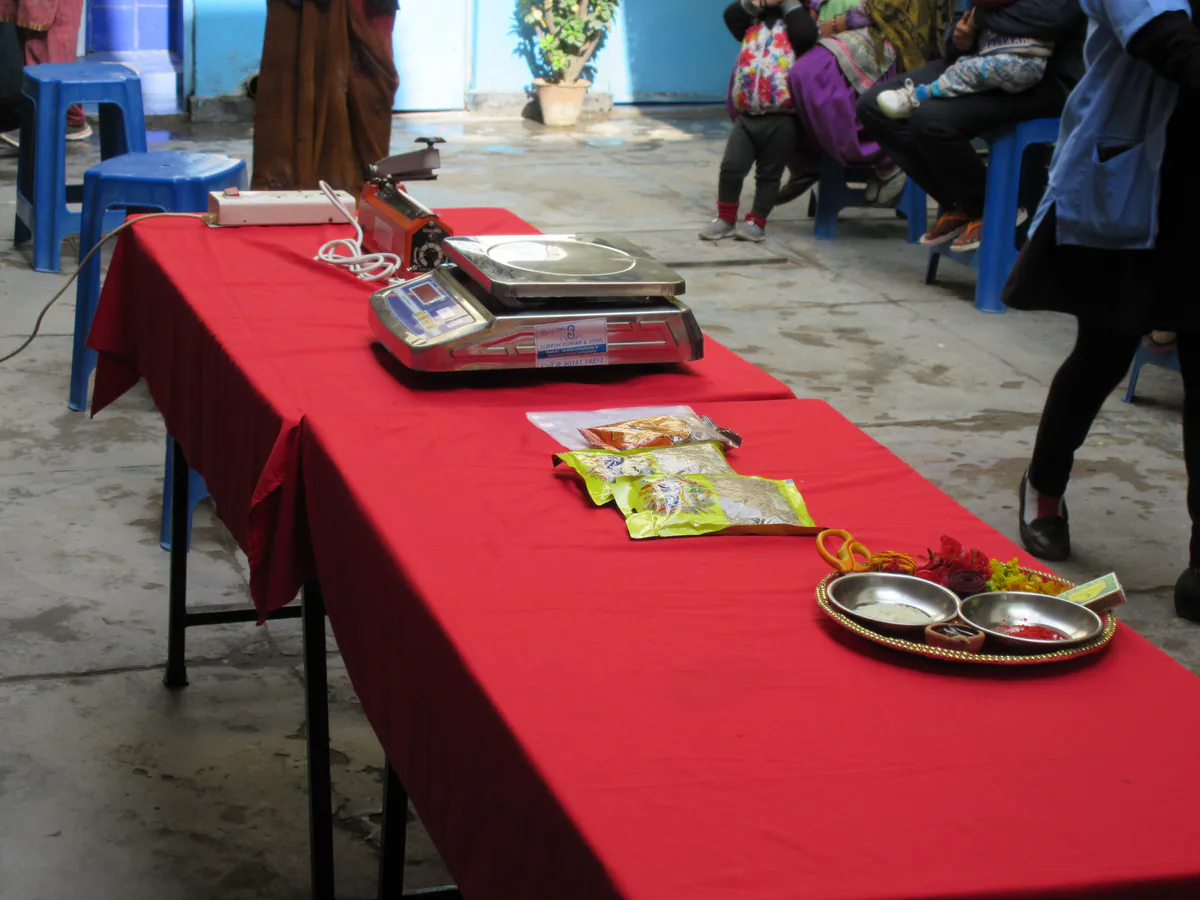
Spices weighed and packed for sale
Donate
UPI or bank transfer, for donors in India.
DonateVolunteer
Students and professionals join our team.
Join the teamContact
Visit us in Nayagaon, Monday to Friday.
Get in touch