Each month, the Health Promoters visit the families on their registers in Janta Colony and Dhanas. They weigh each child under five and mark the weight in the green, yellow or red zone.
“A child in the red zone is underweight for their age.”
At the doorstep
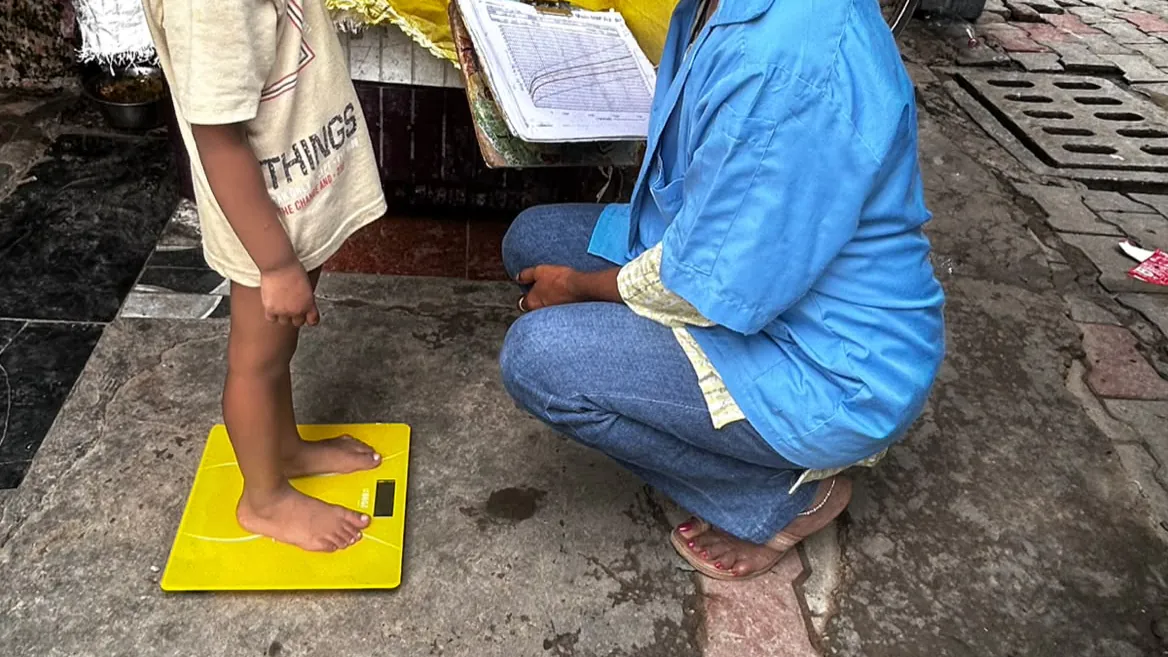
The weighing happens where the families live. A Health Promoter in her blue coat sets a small yellow scale down at the doorstep or in the lane. The child steps on barefoot, often with the mother close by, and the Health Promoter writes the weight in the register she carries.
What the zones mean
A child in the red zone is underweight for their age. Yellow is a warning sign; green means a healthy weight.
Children in the red zone are invited to the weekday meals of our nutrition programme (NIPP) at the DIR office.
August, in the monsoon
In August, some children were away with their families in their home villages. The Health Promoters weighed the children who were at home and kept track of each red-zone child: who was weighed, who was away, and whose weight went up, went down or stayed the same.
August is hot, humid and rainy, and the monsoon brings mosquito-borne illness and stomach infections. So the Health Promoters also held community meetings on dengue and typhoid.
Compared with June, more children were in the green zone in August, in Janta Colony and in Dhanas alike.
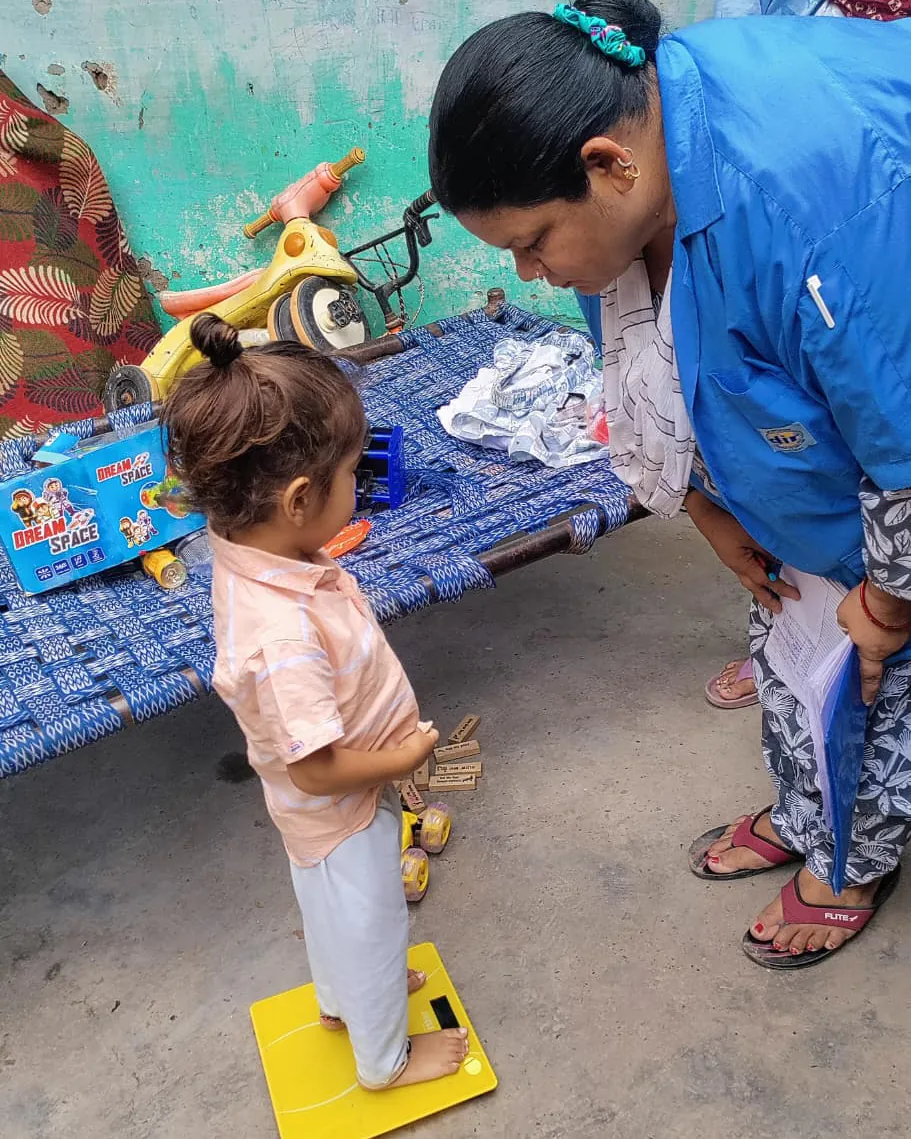
A Health Promoter weighs a toddler at home, August 2026. 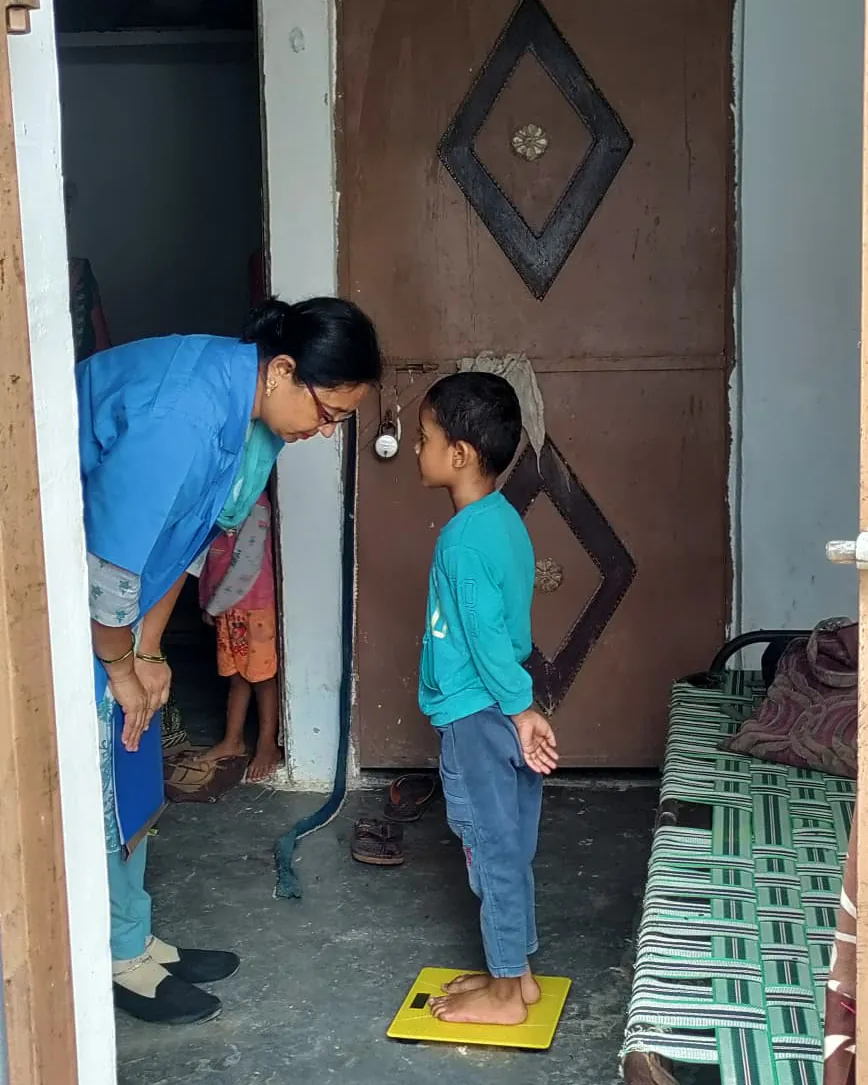
A weight check at the door of a home, August 2026. 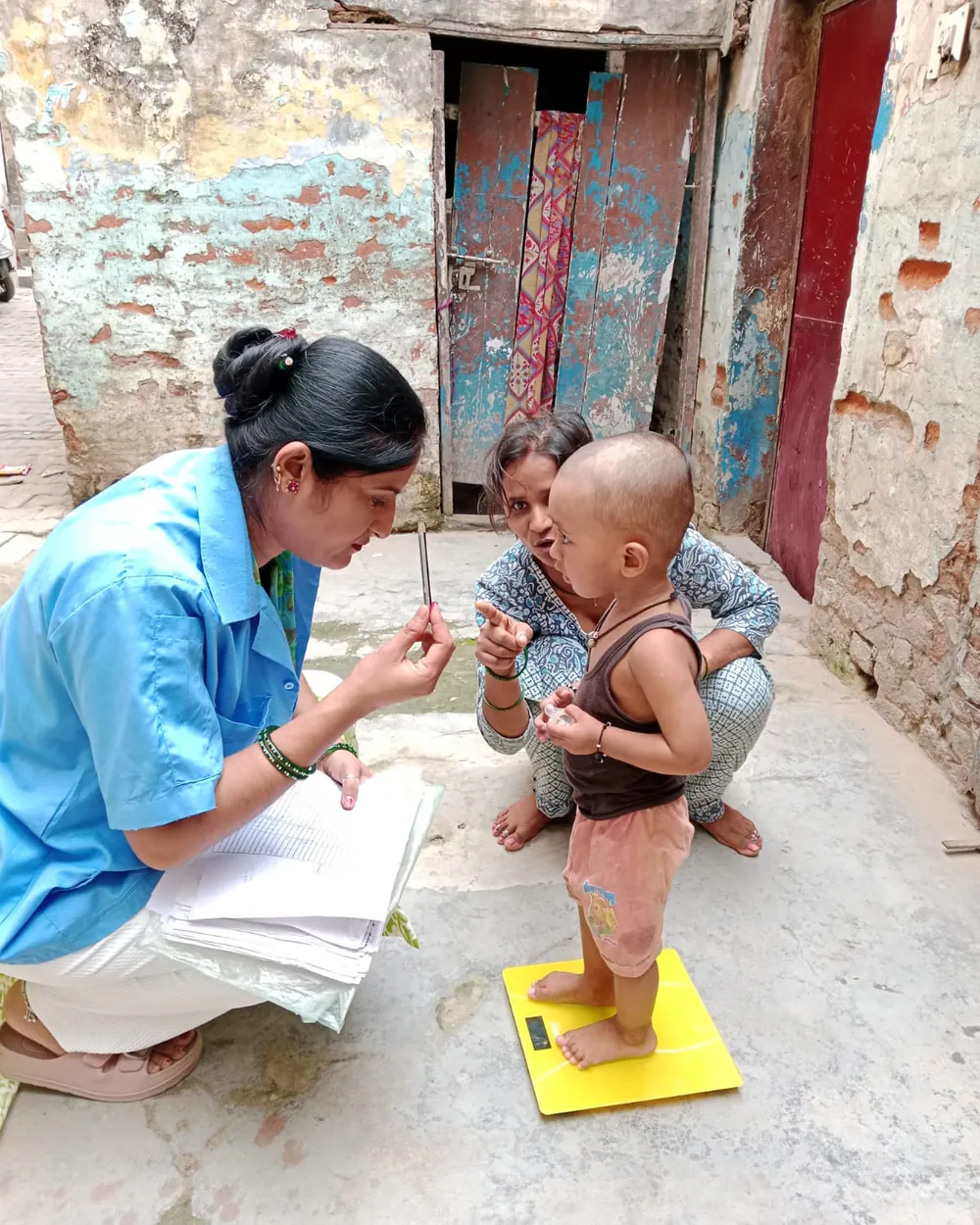
A Health Promoter records a weight in a lane, August 2026.