When I arrived at DIR India in May, I had no idea that within days I would be making up stories with five-year-olds, sketching game boards and watching shy children find their own voices.
“Words don’t need a whiteboard; they need context and joy.”
What began as a design exercise quickly grew into something far more human: a journey into the power of storytelling to help children grow, in their thinking and in their feelings.
More than the ABCs
When we think of how children learn, we often picture the alphabet, numbers and the first steps of writing. But beyond the ABCs lies an old and powerful tool that shapes how children think, feel and connect with the world: storytelling.
Whether whispered at bedtime, acted out on a classroom floor or told under a banyan tree, stories are more than entertainment. They help children grow in their thinking, in their feelings, with each other and in their own culture.
We have noticed that children who meet stories through puppet plays, picture books or rhymes respond with more curiosity, empathy and resilience. Where toys are few and school supplies are limited, stories offer whole worlds. They ask children to imagine, to ask questions and to relate to others. They feed both the mind and the heart.
What I noticed in the classroom
On my first day I visited the Project Alambana classes at SWAD School. The children were bright, full of energy and eager to recite the poems and songs they had learned, in Hindi and in English. They know “Machhli Jal Ki Rani Hai” by heart. They can say their times tables.
But beneath that confident recall, I noticed something missing: chances for imagination, for self-expression and for understanding feelings. What children say, and how they say it, shows how they make sense of the world. Storytelling helps children to:
- build words for their feelings
- remember events in the right order
- think in flexible ways
- feel that their own choices matter
When a child says “Bijli got wet in the rain”, she is not just speaking. She is creating a world, solving a problem and placing herself at the centre of the story.
A question about lunch
The idea for a game came from a small moment on a home visit. A member of the DIR field team gently asked a little girl, “Aaj khane mein kya khaya?” (What did you eat today?) The open question drew an honest, spontaneous answer, and it stayed with me.
I began to design a board game. Not to teach the children more letters, but to help them find their own voices.
The game: A Day in the Life
The game uses characters and picture cards, so that children can make up short stories from their own point of view. Each child chooses a character token, such as Bijli the Cat or Pahi the Pigeon. Story tiles show places, objects, feelings and actions: mud, a banana, a happy face, an egg. The children roll a dice or pick a number card and move their character along the tiles, step by step.
At each tile, a question starts the story: “What happened next?” or “How does Meenu the Monkey feel in the mud?” The children answer in words, sounds and actions.
It was never just a game. It was an open-ended language tool, a small stage for performance and a mirror for how the children were feeling.
Playing it with the children
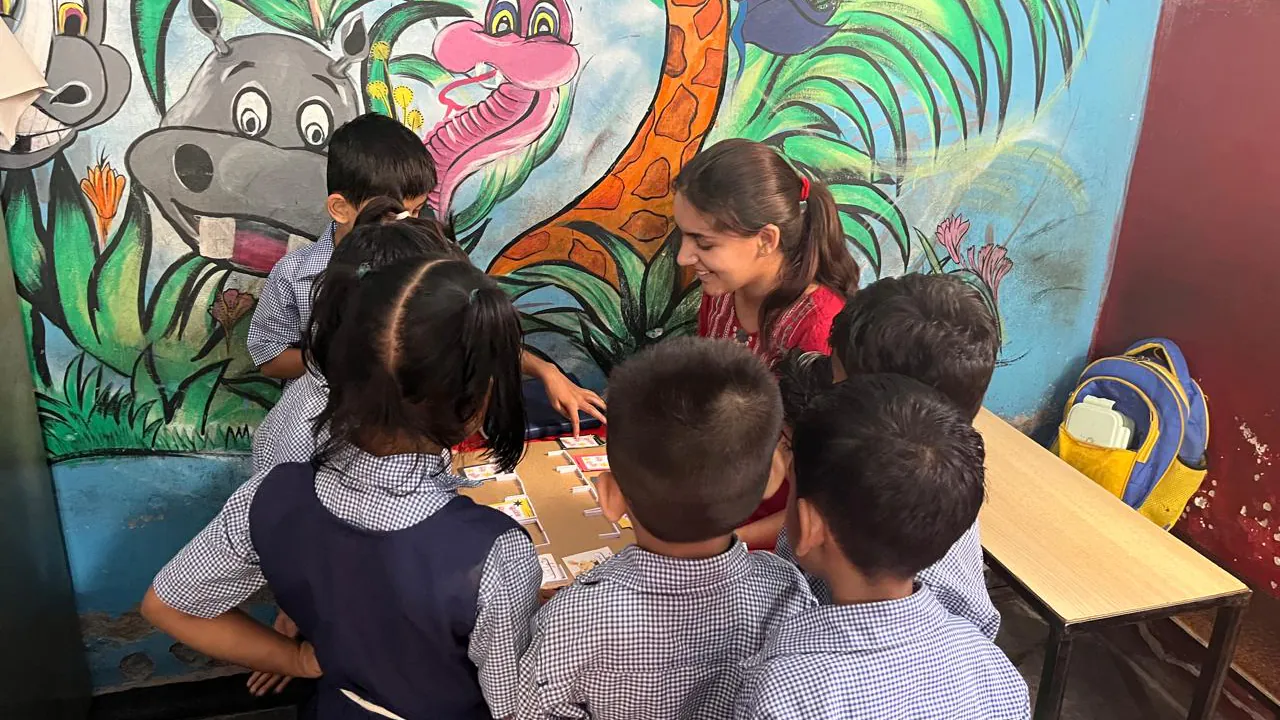
A few days later I finally played the game with the children. As soon as they saw it, their faces lit up. They couldn’t get enough.
- First round: hesitant stories and lots of help.
- Second round: less prompting, more excitement, and a twist the children invented themselves, which they called “Confusion”.
- Third round: fluent, imaginative stories, better words, and stories with a beginning, a middle and an end.
The twist worked like this: when one player was about to turn over a card, the others shouted out their guesses, “Sun? Running?” It added a layer of playful suspense, and the children loved it.
Each child played the game again and again, and nobody wanted to stop. One child, who had barely spoken in the first round, was saying every word out loud by the end. Another built a whole story from her own imagination, from mud to mangoes to “bhaagte hue Bijli” (Bijli running off). One boy watched a couple of turns and called out, “Wow, we can study and play in this game!”
Words that come with joy
The children were not just playing. They were putting events in order, expressing feelings, building confidence and moving from learning by heart to learning through connection.
One change moved me most. At first, when a card said “दौड़ना” (to run), the children read it as “भागना”, a word they knew better. After a few rounds of play, they read “दौड़ना” correctly. Words don’t need a whiteboard; they need context and joy.
The children had ideas of their own, too. They asked for more characters, for cards about what they learn at school and for a memory game. When I promised to bring more cards the next day, they were even more excited.
A bridge between home and classroom
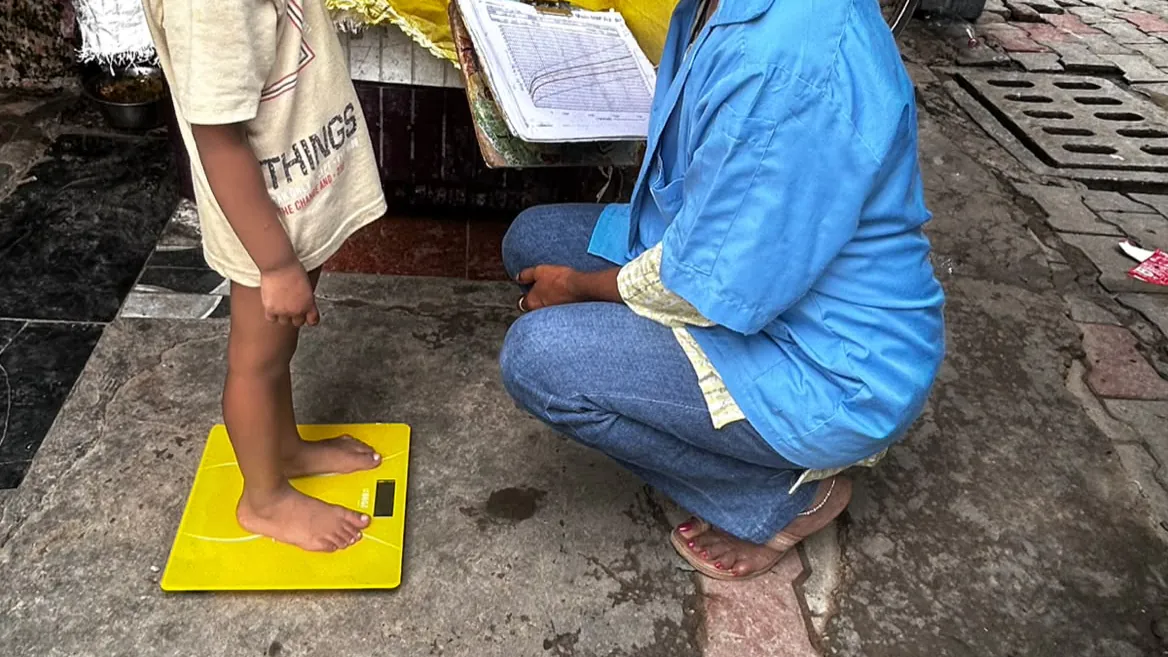
At DIR India, learning is part of daily life. When Health Promoters ask a child about breakfast, it is not to collect data but to connect.
In that spirit, the game became more than a classroom tool. It became a bridge between home and classroom, a mirror for who the children are and what they imagine, and a path to emotional growth and a voice of their own.
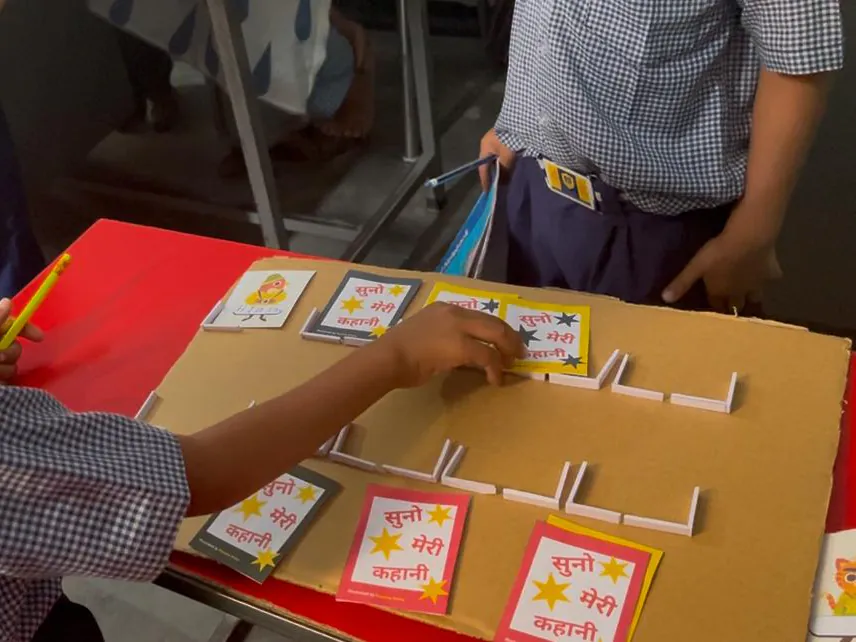
Children build a story on the game board, 2025. 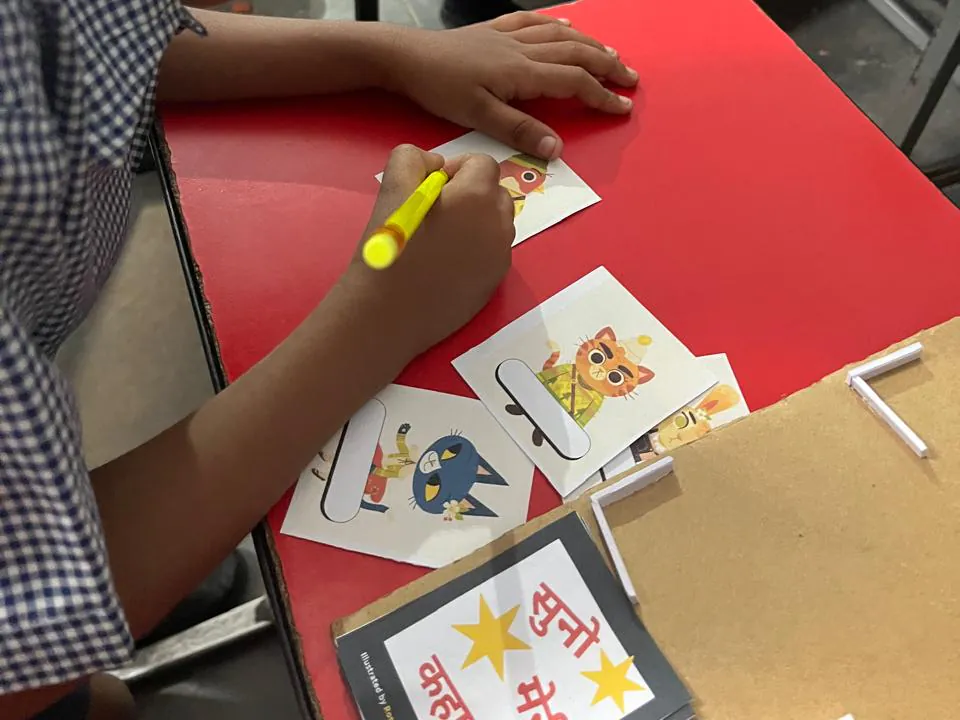
A child colours a character card for the game, 2025. 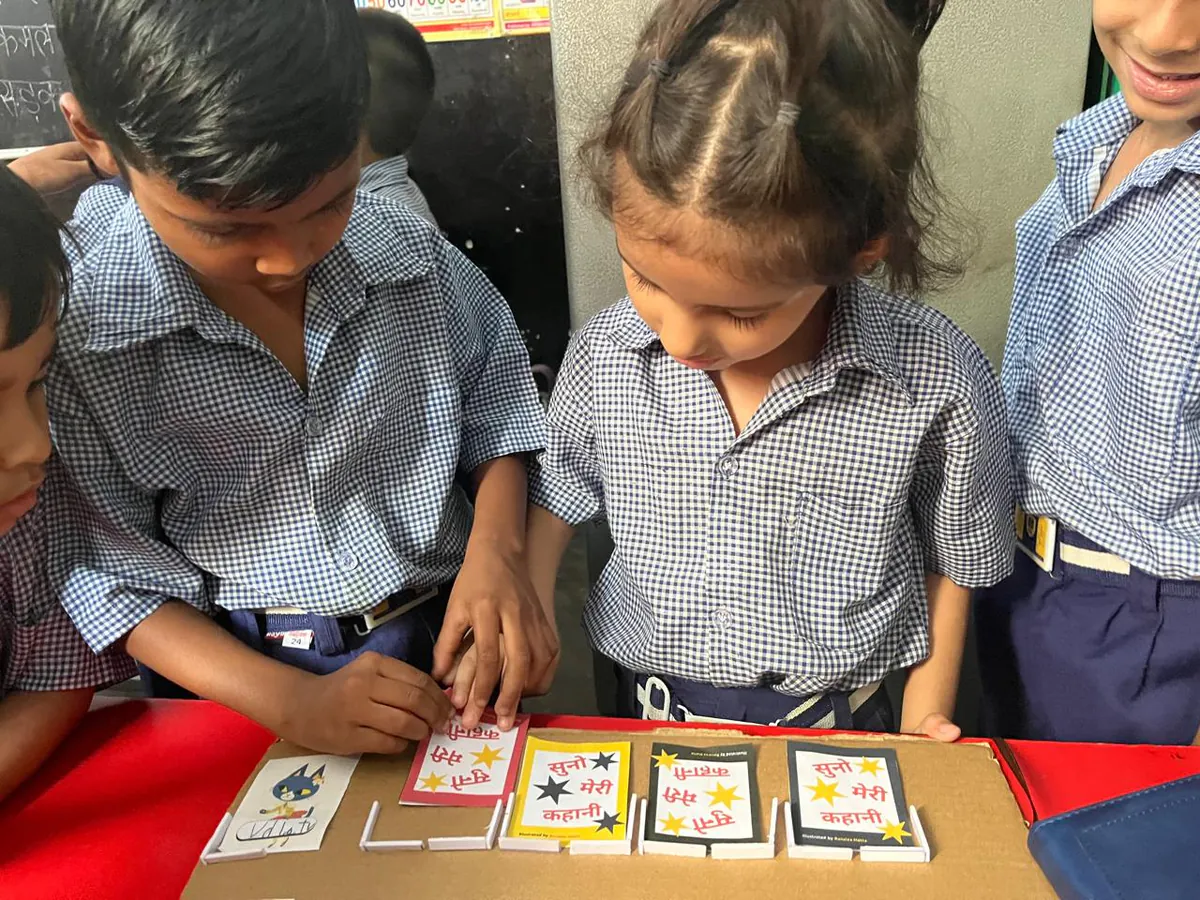
Children take turns on the story board, 2025.