In my first week at DIR India, my task was simply to watch and understand how the organisation works. By the end of it I had drawn and printed a set of story cards, made posts for DIR’s social media and planned my next weeks of community research.
“Their presence is more than functional; it is relational.”
The story game itself, and how the children played it, is told in “Beyond ABCs”. This is the other half: what a design intern makes, and what the making taught me.
Watching first
On my first day I was given a tour, and I was nervous. In one office I saw the colour-coded zone charts for children’s nutrition in Janta Colony and Dhanas. In the Alambana classes, children recited rhymes in Hindi and English with clear voices. Later I joined the Health Promoters on a field visit.
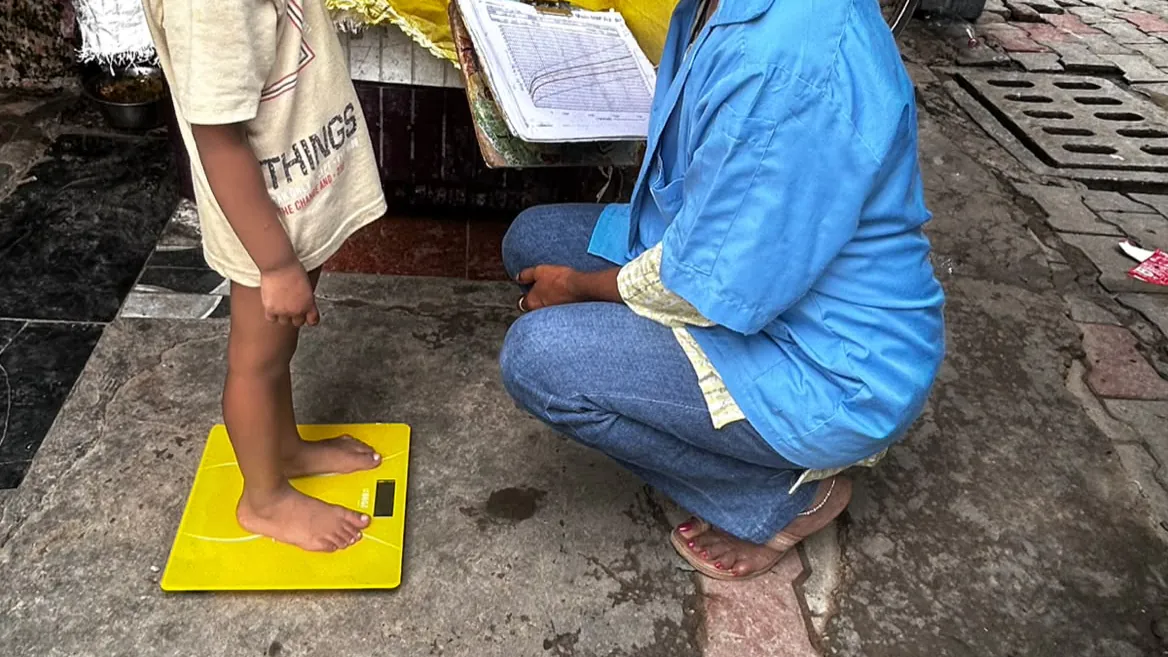
That visit was not only about weighing children. The Health Promoters were inviting women and adolescent girls to a session for Menstrual Hygiene Day, where free sanitary pads would be given out. People greeted them with warmth and trust, and they asked in turn about vitamins and how everyone was keeping. Their presence is more than functional; it is relational.
I came back to my desk with more ideas than I had time for. That is a good place for a designer to start.
From sketch to story card
The next day I was unwell and worked from home. I spent most of it building the first prototype of the game.
I drew the characters on a tablet: a girl with her eyes closed and her chin on her hand under a big question mark, a girl running, a smiling face. Each card pairs one picture with one word in English and in Hindi: Home and घर, Thinking and सोचना, Running and दौड़ना, Happy and खुश. Every card back says “सुनो मेरी कहानी”, Listen to my story. I laid the cards out on screen, printed them at home and cut them out by hand.
A prototype is quick and rough on purpose. It exists so that the people it is for can tell you what is wrong with it.
What the children taught the designer
They did. When I tested the game in the classroom, a few design lessons came out alongside the children’s stories:
- Colour. The printed colours did not match the screen. It did not spoil anyone’s fun, but the next print needs colour correction.
- Words. Looking through the children’s notebooks, I saw they mostly wrote short words and were not yet at ease with matraein, the vowel marks. My cards used them. Play turned out to help here, as “Beyond ABCs” describes, but the card words should grow with the children.
- Characters. There were only four, so the children shared them. They asked for more character cards, for cards based on what they learn at school, and for a memory game.
Children are honest testers. Their requests became my list for the next set of cards.
A post for Menstrual Hygiene Day
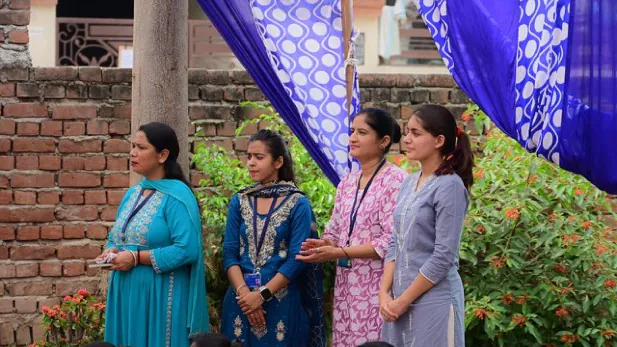
On Menstrual Hygiene Day I watched the Health Promoters set up the community event they had planned. Every woman on their lists came. The chief guest, a doctor, spoke about her own journey of overcoming period stigma, at home and in her career, and many in the audience were moved. A trainer from the partner company showed how to use cotton pads correctly and encouraged the younger women to try a period tracker app.
I could see how much planning had gone into the day. Afterwards I made a social media post with its highlights, so that more people could see the work behind it. Earlier in the week I had made another post, on quality education, from a photo of a teacher helping children at their desks.
Field diaries: behind the numbers
I also designed a short series of posts called Field Diaries. Its first episode, “Behind the numbers”, follows the Health Promoters’ work step by step: they visit the colony, weigh the children, record the data by hand, and hold meetings with women to share what they know about nutrition, hygiene and the signs of illness.
The same charts that caught my eye on the first day sit at the centre of it. My essay “What numbers can’t show” is about the stories behind them; the posts try to show the people.
What I learned
Design here starts with listening. One moment shaped my first week: a field coordinator asked a little girl what she had eaten that day. It was one open question, and the child answered freely. I tried to build that kind of question into the game.
I also learned that small things travel. A card can be printed again. A post can be shared. A plan can be handed to the next person.
What an intern can bring
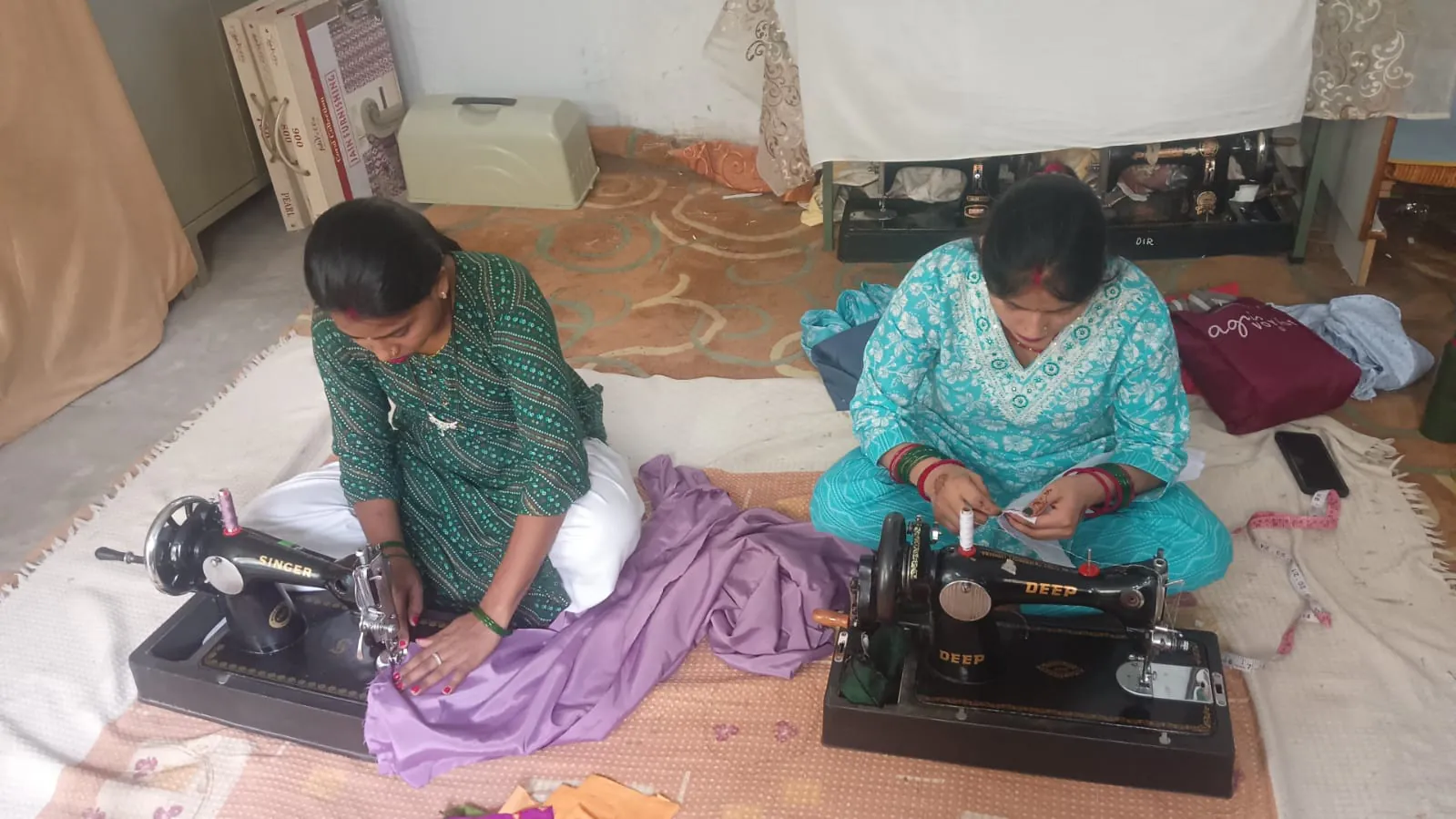
An intern does not arrive with answers. But a design intern can turn what the team already knows into things people can hold and share: cards for the classroom, posts that show the Health Promoters’ work, a fresh look at the data. The Health Promoters, teachers and children bring the knowledge; the intern helps give it a shape.
My next weeks were planned around community research in Janta Colony: field observations and interviews to understand its challenges, then designs that fit them. To prepare, I joined the Health Promoters for a class on dysentery, ahead of more field visits with them, and began learning to work on the monthly report for Janta Colony and Dhanas. And I promised the children more cards.
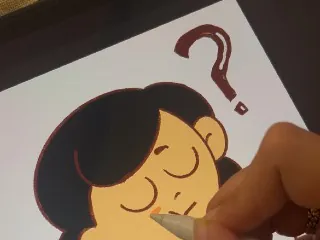
Drawing the thinking character for the story cards, May 2025. 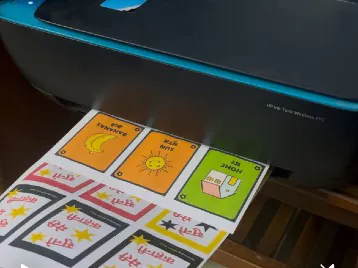
The first story cards come off a home printer, May 2025. 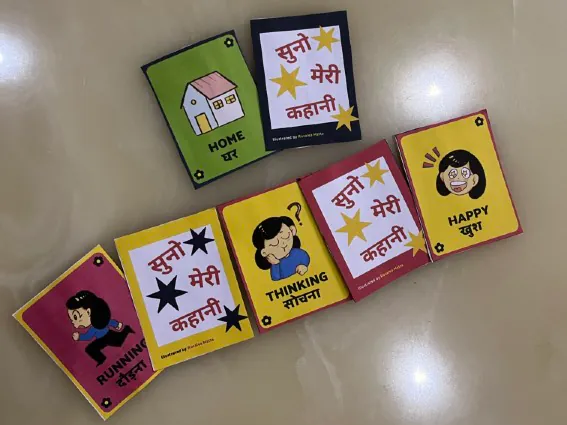
The prototype cards, in English and Hindi, May 2025. 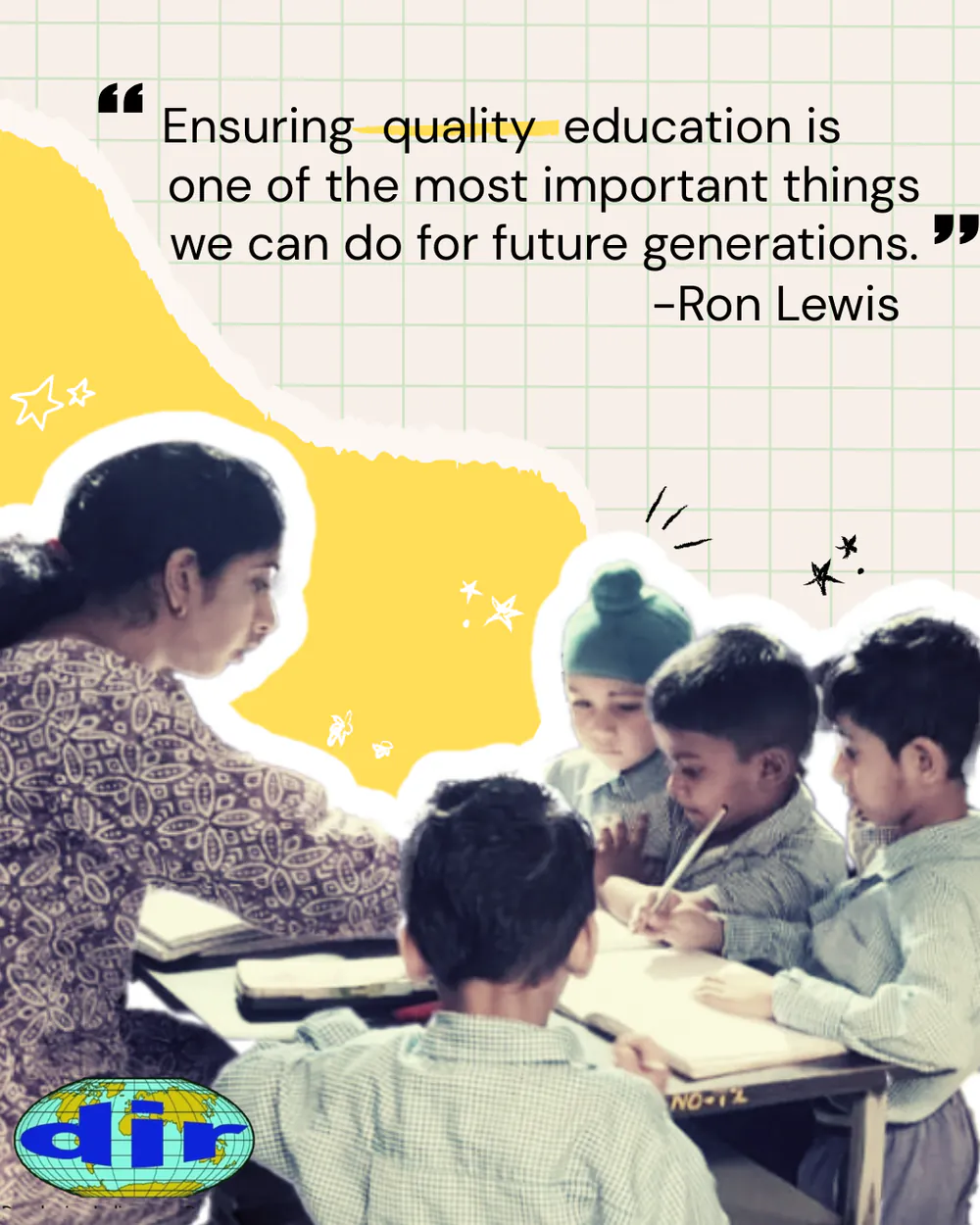
A post on quality education for DIR’s social media, May 2025. 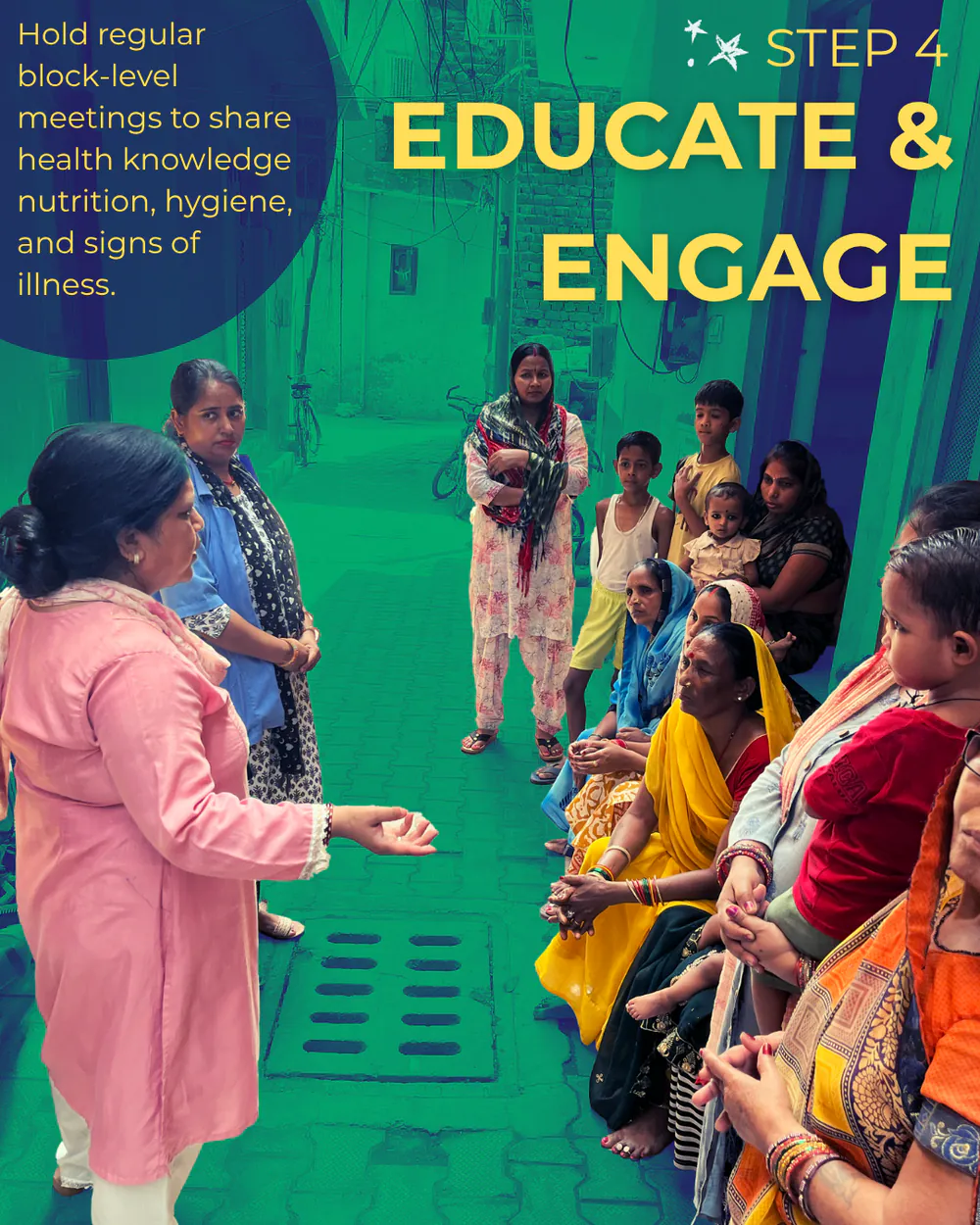
A post from the Field Diaries series, 2025.