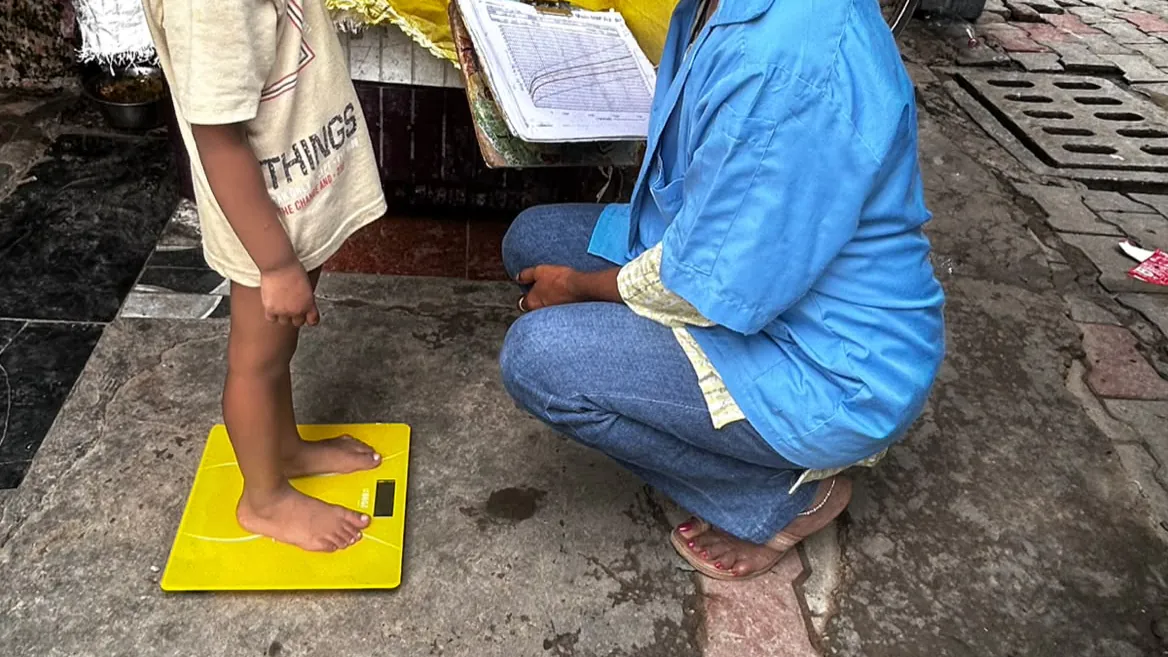
Every month, the numbers are added up. Children are weighed. Red, yellow and green zones. Weight gained, weight lost. There are zeros that sting, and upward arrows that bring new hope.
“Real change begins not in clinics, but in kitchens.”
These figures make their way into monthly reports and tables.
Behind every number, a story
But behind every number, every gram gained or lost, there is a story. It slips past graphs and summaries, waiting to be noticed in the shade of a tree or in the quiet sigh of a mother at her doorstep.
This is a story about what the numbers on the chart don’t show.
Reading the zone chart
At first glance, the zone report reads like a performance chart. A child in the red zone is at risk of undernourishment and fragile health. Yellow signals caution. Green marks recovery, by the standards of the World Health Organization.
But look a little deeper. Some Health Promoters weigh many children, often with many in the red zone. Others have fewer entries, with gaps or zeros. It is tempting to read this as a sign of hard work or of neglect. The truth is more layered.
One Health Promoter may serve a crowded block. Another works where families come and go, and where migration, seasonal work or insecure housing break the monthly rhythm. The data doesn’t show who waited outside a locked gate, or who walked an extra kilometre just to find a child.
Trust you cannot chart
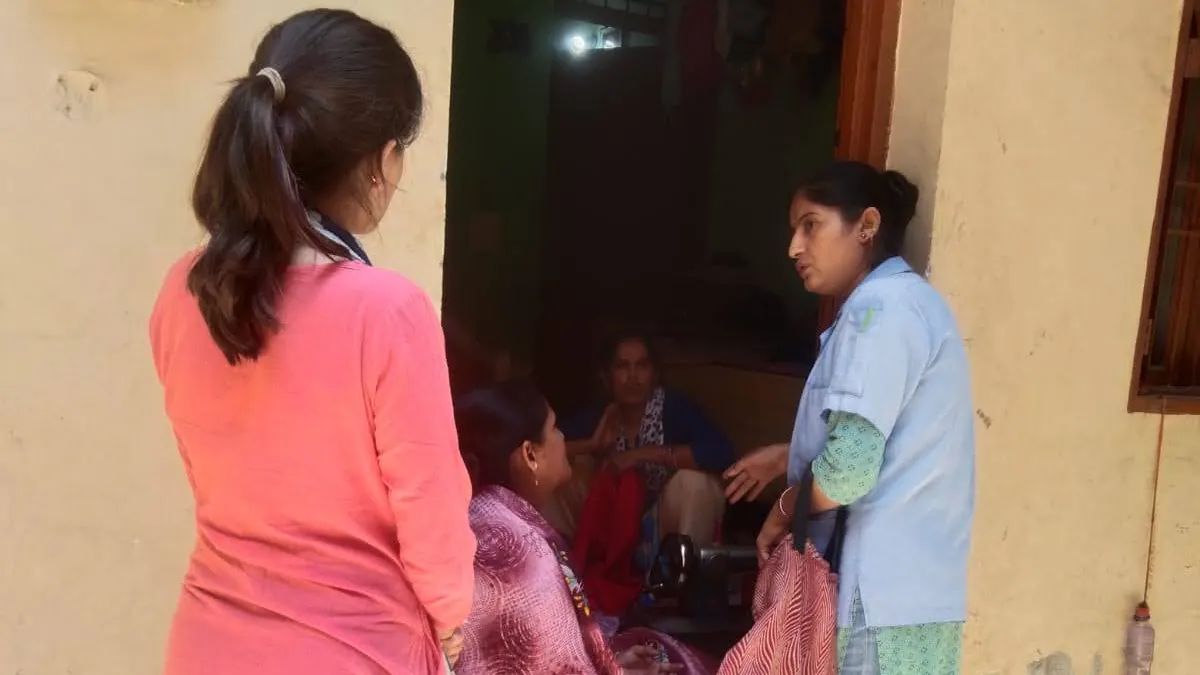
On my field visits, I saw something no chart could reflect: trust. Mothers brought their children to be weighed of their own accord. Conversations about fever and feeding were not forced; they flowed.
One mother told us: “Wazan karwana zaroori hai… warna toh pata hi nahi chalta.” (Getting them weighed is important… otherwise how would we know?)
This trust isn’t built overnight. It is earned over months, through consistency, warmth and deep listening. When a child steps onto the weighing scale, it isn’t just a medical check; it is an act of faith.
When children move between zones
Each month, children move between the zones: sometimes from red to yellow to green, and sometimes, heartbreakingly, back again. A single week of illness can undo several weeks of progress. A lost job can mean fewer meals at home.
I remember reviewing a red-zone chart and pausing at one child’s name. “What’s her story?” I whispered. Was she teething? Recovering from an infection? Was her mother unwell too? Or was it just a week when the lentils ran out?
Here is what the data can’t always tell us:
- A zero might mean the child was away, or simply a locked door.
- A gain might reflect better food, or the kindness of a neighbour who shared milk.
- A drop might mean illness, but also a mother too tired to ask for help.
We must not discredit the data: it is vital. But it must walk hand in hand with stories, not ahead of them.
Adding stories to the data
So how do we bridge the gap? To truly understand and support children’s health, we need to weave what families tell us into what we count. These are my suggestions:
- Short notes beside the figures. Health Promoters could add a line of context next to each record: an illness, a shortage of food, or a good change in how a child is cared for.
- More conversations like the meal check-ins. When the field team asks what a child ate for breakfast or lunch, real conversations start and the community joins in.
- Ways to see trust. How often families welcome a repeat visit, what mothers and other carers say, and short notes on good moments could all show trust growing.
- Storytelling skills for Health Promoters, so that they can share cases that show both the difficulty and the change.
When we add the depth of lived experience to the precision of data, we move from monitoring children to understanding them, and from tracking results to building trust.
Where change begins
One of my most memorable visits didn’t involve a weighing scale at all. It was a small circle of women in the shade of a building, talking about the heat, clean water and simple, sustainable ways of cooking and eating.
Real change begins not in clinics, but in kitchens. Not on charts, but in shared stories.
As the work continues in Janta Colony and Dhanas, let us not just count children. Let us see them. Let us listen. And let us design support that honours not just their numbers, but their stories.
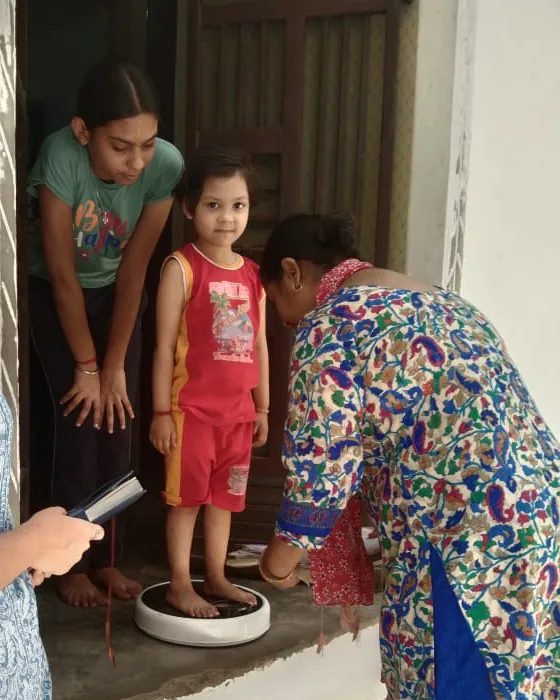
A weight check at the door of a home, June 2025.